Learning Culture in Adult Social Care: From Compliance to Curiosity
In every inspection, one question quietly influences whether a service is “Good” or “Outstanding”: how does your service learn?
The Care Quality Commission’s Learning Culture Quality Statement expects providers to demonstrate “a proactive and positive culture of safety based on openness and honesty.” In practice, this means using every incident, complaint, and near miss as a shared opportunity for learning and improvement rather than treating them as isolated events or compliance tasks.
Yet, many services are still stuck in a compliance loop, reporting events but not learning from them. The difference between compliance and curiosity often separates those maintaining a “Good” rating from those achieving “Outstanding”.
1. What the CQC Means by a Learning Culture
At its heart, a learning culture is about psychological safety where staff feel able to raise concerns, share mistakes, and discuss what went wrong without fear of blame or ridicule.
It connects directly with:
Regulation 12 (Safe Care and Treatment): ensuring incidents are investigated, analysed, and used to prevent harm.
Regulation 17 (Good Governance): requiring systems that monitor, evaluate, and improve quality and safety, turning data into action.
CQC wants to see evidence that providers:
Analyse incidents, accidents, and complaints to spot patterns.
Communicate lessons and actions across the service, not just record them.
Make visible changes that improve safety and people’s experiences.
Involve staff, families, and professionals in understanding what happened and what has changed.
In short, learning must be seen, not just said.
2. What We’re Seeing in Recent Inspections
A review of 2025 inspection findings across a range of care homes reveals a clear pattern:
Score
Typical Characteristics
Example Themes
4 (Outstanding Practice)
Thorough reviews after each incident, strong “no blame” culture, clear evidence of service-wide learning.
Choking prevention toolkit audit, shared across multiple homes leading to tangible practice changes.
3 (Good Practice)
Positive safety culture with active reporting and discussion of incidents; some inconsistency in trend analysis or documentation.
Regular meetings and supervisions used to share learning, though oversight tools not always embedded.
2 (Requires Improvement)
Learning is discussed verbally but not analysed or recorded; staff unsure what lessons have been learned; actions not evidenced.
Incomplete incident analysis, repeated errors, limited evidence of change following accidents or safeguarding events.
These findings show that most services understand what learning culture means, but not always how to prove it.
3. Turning Regulation into Practice
Here’s how to bring Regulation 12 and Regulation 17 to life through daily habits and leadership behaviour.
A. Move from Reporting to Root Cause Thinking
Every incident report should prompt the question: why did this happen?
Go beyond “staff error” or “slipped in bathroom” to explore the contributing factors such as environment, training, staffing, communication, supervision, or risk assessment.
Root cause analysis doesn’t need to be complex; even simple 5 Whys questioning can reveal what systems need strengthening.
B. Create Visible Feedback Loops
Staff disengage when learning is invisible. Make improvements clear through:
“You Said, We Did” boards for both staff and residents.
Quick debriefs after incidents or safeguarding events.
A section in staff meetings called “What We’ve Learned This Month” these could be displayed on posters in staff areas too.
Visual dashboards showing falls, medication errors, and actions taken.
Learning is only culture when it’s shared, seen, actioned, and celebrated.
You haven’t learned until what you’ve seen changes what you do.
C. Link Learning to Supervision and Training
Use reflective supervision templates to connect incidents with learning themes, for example, “What did we learn from the recent falls audit?”
Embed case discussions into induction and ongoing training, showing new staff that continuous learning is not a reaction to failure but part of good care.
D. Involve People and Families
CQC’s “I Statements” emphasise transparency: “I feel safe and am supported to understand and manage any risks.”
When families see open conversations after incidents, trust grows. Where appropriate, share learning outcomes with residents and relatives to show accountability and compassion in action.
In one inspection where the service was rated ‘Good’ the CQC reported the below in the Learning Culture Quality Statement.
Relatives told us that they were kept informed when things went wrong and how the service learned from incidents. One relative said, “Totally honest and transparent,” another said, “If anything happens, they inform us immediately.”
4. Common Pitfalls and Missed Opportunities
Inspection findings reveal recurring issues in services rated Requires Improvement:
Incident reviews exist but are not analysed for trends.
Learning is verbal only, with no audit trail.
Corrective actions are made but not evaluated for effectiveness.
Staff can’t give examples of what has changed following mistakes.
Although some incidents are reported and learned from, near misses and minor injuries are not always recorded or analysed. This means valuable opportunities for learning and improving safety are often lost
These gaps weaken both Regulation 12: Safe care and treatment and Regulation 17: Good governance compliance. They are fixable with structured reflection, better documentation, and leadership follow-through.
5. The Mindset Shift: From Fear to Curiosity
The most successful homes treat learning as a shared curiosity rather than individual blame. One registered manager captured it perfectly in an inspection:
“All reports are reviewed and signed off, I look at what needs addressing, what needs reporting, and keep families informed. We undertake root cause analysis which includes, clinical and health and safety procedures, individual risk assessments, where and why/how it occurred, and preventative actions.”
That mindset embodies the future of regulation: learning as leadership.
As CQC moves toward real-time monitoring and dynamic assessment, it’s not just what happens after something goes wrong that matters. It’s how leaders prove they are learning every day.
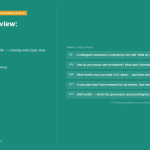
Use these questions to turn this article into an active reflection exercise with your senior team or during your next supervision session. Encourage open discussion, not just written responses.
When was the last time you could clearly evidence a “lesson learned” leading to a measurable change?
Think about what changed in practice or outcomes. Was it recorded? Could an inspector see the difference?
How do you know staff feel psychologically safe to raise concerns or admit mistakes?
What signals do you notice? Are staff comfortable challenging decisions, or do they stay silent? How do you respond when someone admits an error?
What’s your system for sharing learning across shifts, teams, and locations?
Does everyone hear about lessons learned, or do insights stay within certain groups? How could you improve the flow of information?
How do you close the loop on learning, showing that changes have worked?
When actions are taken, who checks their impact? Is there a review date or feedback mechanism to confirm improvement?
Does your governance dashboard show learning trends, or just incidents?
Consider whether your current systems help you see themes over time, such as recurring issues or successful interventions.
Prompt for action: After reading this article, identify one thing you will change in your current lessons learned process to make it more consistent, visible, or impactful, and commit to reviewing the difference in one month’s time.