Governance · Safe systems, pathways and transitions
"I didn't have a clue"
Two services. Two inspection reports. The same finding, in almost the same words: staff did not have the information they needed about people moving in. Both were rated requires improvement overall. One was rated inadequate in safe.
About 13 minutes to readCarevia InsightsPre-admission · Transitions · Safe
Read enough inspection reports and you start to notice which failures announce themselves and which ones arrive quietly. A medication error announces itself. A fall announces itself. An admission where nobody quite knew who the person was does not announce itself at all. It simply becomes the ordinary condition of the first few weeks, until something happens that makes it visible.
Two recent reports show what it looks like when an inspector arrives before that something happens.
In the first, staff told inspectors that admissions did not always give them accurate information about people's needs, and that this left them unsure how best to provide support. The service scored two out of four on the quality statement covering safe systems, pathways and transitions, and was rated requires improvement overall.
In the second, the finding was sharper. A person had moved into the home the week before the inspection. No care plans and no risk assessments had been completed for them. Information about their health needs, their care needs and their preferred routines had not been shared adequately with the staff team. Instead, one staff member described getting what they could from a relative of the person who happened to work at the home, and summed the situation up in five words: "I didn't have a clue." That service also scored two on the same quality statement, was rated requires improvement overall, and inadequate in safe.
The gap between information existing and staff having it
It would be comfortable to read those findings as record-keeping failures. Paperwork not done, forms not completed, an administrative lapse to be tidied up with a new template. That reading is comfortable precisely because it is wrong.
In the second service, information about that person existed. It existed in the referral. It existed in the knowledge of the family. It existed, in fragments, in whatever conversations preceded the move. What had not happened was the work of gathering it, testing it, turning it into something staff could act on, and putting it in their hands before the person arrived. The information was in the world. It was not in the building.
That is the distinction inspectors are making when they look at transitions, and it is the distinction that separates a pre-admission process from a pre-admission form. A form can be completed while the staff who will actually deliver the care learn nothing. A process ends with the night staff knowing how this person likes to be woken, what their pressure risk is, which of their behaviours mean distress and which mean pain, and what to do when it happens at three in the morning.
It is the same gap we have written about elsewhere between a record and reality. A signed MAR sheet evidences that a signature happened, not that a person swallowed a tablet in a way they understood and agreed to. A completed admission form evidences that an assessment happened, not that anybody knows who arrived.
What the relative in that report was actually doing
The detail that should stop any manager reading the second report is the staff member asking the person's relative for information, because that relative worked at the home.
Consider what was being asked of them. They had become the service's care plan. They were the risk assessment, the medication history, the routines document and the communication passport, held in one person's memory and available only when they happened to be on shift. Everything the team knew about their family member, they knew because that relative was willing to keep answering.
It is worth being clear about how many ways that arrangement fails. It fails the staff member who had to ask, because asking a colleague about their own relative's continence needs or behaviour is not a professional information system and should never have been their only route. It fails the relative, who came to work and found themselves carrying a governance failure on top of the ordinary difficulty of having someone they love move into a care home. It fails the person who moved in, whose privacy now depends on family conversations rather than a controlled record, and whose care on any shift depends on which colleagues that relative has managed to brief. And it fails on nights and weekends, when the relative is not there and nobody has written any of it down.
Nobody in that building set out to create any of this. It is what happens when an admission proceeds and the information work is deferred, and the deferral is invisible for exactly as long as somebody is available to fill the gap.
Why transitions sit in safe
Safe systems, pathways and transitions is a quality statement that many services underestimate, because it is easy to read it as being about paperwork moving between organisations. What both of these reports show is that it is really about a much more basic question: when a person arrives, does the team know how to keep them safe on the first night?
Everything that makes an admission unsafe is knowable in advance. The swallowing risk is knowable. The pressure risk is knowable. The medication that must not be missed, the early signs that mean this person is becoming unwell, the approach that calms them and the approach that escalates, the thing that happened at the last placement and what was going on just before it: all of it exists before the person arrives, in documents somebody holds and in the heads of people who could be asked.
An admission that proceeds without that information does not become risky when something goes wrong. It was risky from the first shift. The incident, when it comes, is not the failure. It is the moment the failure becomes visible.
There is a governance dimension too. Missing care plans and risk assessments for a person already living in the service is not only a safe finding. It speaks directly to Regulation 17 and good governance: the systems that should have told the manager this work had not been done, and did not. If you want the wider picture of how quality statements are scored and how those scores become a rating, our guide to the CQC assessment framework sets that out.
This is a person-centred failure first
It is tempting to file these findings under safety and stop there. But look again at what was missing in the second service: not just risk assessments, but the person's preferred routines. How they like their day to go. What normal looks like for them.
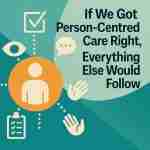
We have argued before that if we got person-centred care right, everything else would follow, and an admission is where that argument is tested at its sharpest. A person who moves into a service and is not known does not experience a governance gap. They experience being woken at the wrong time, offered food they do not like, addressed by a name they never use, and supported by people who are guessing. The clinical risks are real and they matter. But the daily indignity of being a stranger in your own home starts on day one, and it starts because the work of knowing the person was not done before they arrived.
This is also why the information has to reach the records staff actually use. A pre-admission that ends in a file nobody opens produces exactly the pattern we describe in our piece on daily care notes: entries that describe tasks, because nobody knows enough about the person to describe anything else.
What an effective pre-admission actually does
The difference between an effective pre-admission assessment and a rushed one is rarely the document. It is a set of behaviours, and each of them is recognisable in the reports above by its absence.
It gathers from more than one source. The referral is an account of the person written by somebody else, for a purpose that is not identical to yours. Read it in full, and then read the assessments behind it. Ask the person, the family and the staff who support them now what a good day and a bad day look like, and what they wish the last service had known. Observe where you can: ten minutes watching a mealtime tells you things that no document will.
It checks what it is inheriting. A score quoted in a referral is not the assessment. Before relying on a SaLT recommendation, a pressure risk score, a capacity assessment or a positive behaviour support plan, three questions are worth asking every time: when was the most recent one done, does it still apply in your setting, and do you actually hold a copy of it. Staff cannot follow a plan the service has never seen.
It tests the service, not just the person. The honest question is not whether the person's needs are manageable in principle. It is whether the staff you actually have, on the shifts they actually work, including nights, weekends and agency, can meet them. Where the answer is not yet, the gap needs an owner and a date, and it needs to close before the person arrives rather than afterwards.
It ends with the team knowing. This is the part that both reports found missing. An assessment that stays with the manager has not finished. The test is not whether the file is complete. It is whether the staff member starting a shift on day one could describe this person's needs, risks and routines without asking anybody.
The uncomfortable version of this question
Most services reading this will have a pre-admission form, and most will believe their admissions are handled well. So did both of the services in those reports, in all likelihood, right up until an inspector asked their staff.
That is the part worth sitting with. In both cases, the finding did not come from reviewing the paperwork. It came from asking staff what they knew. The documents may well have looked reasonable. The knowledge was not there, and the inspector found the gap by talking to the people who were supposed to be holding it.
Which suggests the way to test your own service is not to audit the forms. It is to pick the last person who moved in and ask three members of staff, ideally including someone who works nights, to tell you about them. What matters most to this person? What are the risks? What does a bad day look like and what do you do about it? If the answers are confident and consistent, your pre-admission process is working, whatever the file looks like. If the answers are vague, or if they all trace back to one person who happened to be told, then you have found the same thing those inspectors found, with the considerable advantage of finding it first.
Confidence is not assurance. However, confidence is clever and can disguise itself as assurance.
Three things worth doing this week
Ask three staff about your most recent admission. Include a night worker. Compare what they say with what the file says.
Check your last three admissions for inherited assessments. For each one named in the referral, do you hold the actual document, is it current, and does it still apply in your setting?
Look at how information reaches the team. Not whether it was recorded, but how a member of staff starting a shift comes to know it. If the answer is handover alone, test what survives a fortnight.
Where Carevia can help
Two Carevia Pro+ resources are built directly around this problem.
The Pre-Admission Assessment tool works in two stages. Part A tests, domain by domain, whether your service can genuinely meet the person's needs, including staff skills, training gaps, registration and setting-specific compatibility, and reflects the evidence back before you record a decision. Part B, Know Me From Day One, unlocks on a positive decision and builds the person-centred record that means staff know who is arriving, printable for the team before the first shift.
Effective Pre-Admission Assessment Training teaches the judgment behind it: why pre-admission is where placements succeed or fail, how to triangulate before deciding, what to observe on a visit, and how to make and record a decision that stands up when someone reads it later. Seven interactive modules, a two-admission case study, and a certificate of completion.
The tool asks the right questions. The training builds the judgment behind them. Both are included with Carevia Pro+.
Frequently asked questions
What does a score of two mean in a CQC quality statement?
Under CQC's assessment framework, each quality statement is scored from one to four based on the evidence gathered. A score of two indicates that evidence showed shortfalls in that area. Scores across the quality statements combine to inform the rating for each key question and the overall rating.
Which quality statement covers admissions and transitions?
Safe systems, pathways and transitions sits within the safe key question. It looks at how services work with people and with other services to ensure continuity of care, including when people move between services or into a service for the first time.
Is a completed pre-admission form enough evidence?
A completed form evidences that an assessment took place. It does not evidence that the information reached the staff delivering care, which is what inspectors test by speaking to staff. The stronger evidence is staff who can describe the person's needs, risks and routines without prompting.
Can a family member working in the service provide information about their relative?
They may contribute to an assessment like any other person who knows the individual well, with appropriate consent. What the report above describes is different: a relative becoming the team's only practical source of information because the assessment and care planning work had not been done. That leaves the person, the relative and the staff team all unsupported, and leaves nights and weekends uncovered.
How quickly should care plans be in place after someone moves in?
The safest position is that the information staff need to support someone safely is available from the first shift, drawn from the pre-admission assessment, with the full care plan then developed and refined as the service comes to know the person. What the report above describes, a week with no care plans or risk assessments at all, leaves staff supporting someone without a basis for safe or personalised care.
This article discusses published inspection findings in general terms and does not identify the services concerned. It is written to support reflective practice and is not legal, clinical or regulatory advice. Always refer to official CQC guidance and use professional judgement.
Get pre-admission right before the person arrivesThe assessment tool and the training that teaches the judgment behind it, both in Carevia Pro+.