It is one of the most frustrating outcomes for providers.
Staff are kind. People are supported with dignity. Care feels responsive, person-centred and compassionate.
And yet the inspection outcome lands as Requires Improvement.
For many services, this feels unfair. For inspectors, it feels inevitable.
Recent inspection patterns tell a consistent story. Services can be caring, responsive and effective, but still fail inspection if safety and assurance systems are weak. This is not about intent. It is about evidence, oversight and learning.
Requires Improvement is uncomfortably close to Good
When you look more closely at inspection outcomes, one statistic stands out.
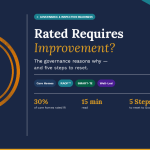
When comparing only Good and Requires Improvement ratings, 42% of services were rated Requires Improvement, with 58% rated Good.
That means Requires Improvement is not a distant failure state. It is uncomfortably close to Good.
For many services, the difference is not values, compassion or staff effort. It is whether systems exist to assure, evidence and sustain safe practice.
This is where many otherwise strong services fall short.
The inspection picture: RI is not an outlier problem
From the wider picture:
189 residential services were inspected in a single month
44.4% were rated Requires Improvement or Inadequate
The significant majority of these were Requires Improvement, not Inadequate
This matters because Requires Improvement is often minimised as nearly Good. In reality, it is one of the most common inspection outcomes and a frequent reason for this is services struggle to evidence consistent compliance.
Domain patterns from Requires Improvement services
Looking at a sample of 20 services rated Requires Improvement, broken down by domain, a clear pattern emerges.
Well-led
100% of services were rated Requires Improvement
No exceptions
This is the most important finding.
Even where services achieved Good in Effective, Caring or Responsive, leadership systems were not strong enough to sustain or evidence that practice.
In practical terms, this often means governance exists, but operates informally. Managers know what is happening, but cannot consistently show how they know, how they monitor, or how they learn.
Safe
Only one service achieved better than Requires Improvement
More than one service was rated Inadequate
In this instance, safe is the second most fragile domain after Well-led.
In inspection terms, this often looks like:
Incidents discussed but not consistently recorded
Confusion about what constitutes an incident or accident
Risk assessments not updated following events
Learning happening informally rather than through a clear process
Systems not in place for safe recruitment, skilled and competent staff, and supervision
These are not care failures. They are assurance failures.
When assurance fails: a real-world prosecution example
Inspection findings are not theoretical. In some cases, weak learning culture and poor escalation systems lead to enforcement and prosecution.
In one real case, Mr A had been prescribed 2.5ml of levetiracetam twice daily. Records showed the last dose was administered on the evening of 5 June 2022. The service did not ensure there was sufficient stock of this medication. It ran out.
As a result, Mr A missed seven doses between 6 and 9 June.
The registered manager received automated email alerts four times a day from the electronic medication stock system flagging the shortage. Despite these alerts, no effective action was taken to order further medication. Mr A did not receive another dose until 9 June 2022.
Mr A was later admitted to hospital, where he sadly died. Seizure activity was identified as one of the contributory factors.
This case was not about a lack of technology, policies, or alerts. The system worked. The failure was in response, escalation and assurance.
If medication runs out in your service, what actually happens next?
Would staff escalate the issue, or record it as out of stock and move on?
Who is accountable for acting on stock alerts, and how is this monitored?
What action would you take if you personally received repeated alerts about out of stock medication?
How do you evidence that missed medication triggers learning, review and preventative action?
Do you have an overreliance on the same pharmacy, or do you have clear alternatives in place if they cannot provide the medication required?
This is where Safe, Well-led and Learning Culture converge. Without clear escalation routes, accountability and learning loops, serious incidents can repeat even when warning signs are visible.
A reflective prompt to use in your service in supervisions and team meetings. What should happen when medication runs out?
Effective, Caring and Responsive
Across the sample, many services achieved Good ratings in these domains.
This often masks underlying system weaknesses. Good practice exists, but it is not reliably governed or evidenced.
This is classic Requires Improvement territory. Staff are doing the right things, but the organisation cannot prove, sustain or learn from them.
In contrast, inspectors describe services like this:
Documentation had been introduced to evidence how actions were taken forward from incidents and accidents and lessons learnt to improve the service moving forward. The manager undertook root cause analysis of incidents and accidents. Where necessary, this was linked to a care plan and risk assessment which ensured all actions to prevent a re-occurrence were in place and reviewed.
Inspectors also noted:
Improvements following repeated falls, including sensor mats
Root cause analysis used to monitor medicine errors, urinary tract infections and pressure wounds
Evidence that actions were reviewed and sustained
What inspectors are describing here is not more paperwork.
They are describing:
A clear method for learning from incidents
A consistent approach to root cause analysis
Visible links between learning, care planning and risk management
Leadership oversight that ensures actions are reviewed, not forgotten
This is what a functioning learning culture looks like in practice.
Reflective questions for leaders and managers
How do you demonstrate that learning from incidents is continuous, not one off?
Can you clearly show how incidents lead to changes in care plans, risk assessments or staff practice?
How do you evidence that actions identified through root cause analysis are implemented, reviewed and sustained over time?
If an inspector asked for examples of learning shared with staff in the last six months, what would you show them?
How do you know that similar incidents are less likely to recur because of the learning you have embedded?
By contrast, services rated Requires Improvement for learning culture often show a very different picture. Lessons are not always learnt to continually identify and embed good practice. Incident and accident forms are not always completed or do not always reflect audits. There can be confusion about what an accident or an incident is, and there is no clear evidence of lessons learnt or sharing of information with the staff team when incidents occur.
This lack of learning visibility frequently extends into care records. It may not be clear whether people have skin damage, including pressure sores, because records are not robust. Records relating to re-positioning charts may not be completed in line with advice from professionals and may be inconsistent. Taken together, these issues demonstrate not poor intent, but a learning culture that is fragmented, informal and unable to provide assurance that risks are understood and being actively reduced.
Why Well-led pulls services into Requires Improvement
Well-led is the domain that holds everything together.
Many Requires Improvement services operate in what could be described as informal assurance mode.
Managers often know their service well, discuss learning in meetings, and rely on experience and professional judgement. This works until inspection.
CQC does not inspect what managers know. It inspects what services can evidence, explain and sustain.
When assurance lives in people’s heads rather than systems, inspection confidence collapses.
A real CQC prosecution highlighting how missed medication, ignored alerts, and weak escalation systems can have fatal consequences. This case reinforces why learning culture, clear accountability, and robust assurance systems are critical to safe care.
Reflective learning: What should have happened?
Real-world prosecution learning
Mr A had been prescribed 2.5ml of levetiracetam twice a day. Records showed staff last provided a dose on the evening of 5 June 2022. The home did not ensure there was enough of this medication in stock. It ran out. As a result, Mr A missed seven doses between 6 and 9 June.
The registered manager received automated email notifications from the medication stock system that alerted them to the stock issue four times a day. Despite this, the medication was not ordered and Mr A did not receive a further dose until 9 June 2022.
Mr A sadly passed away in hospital, with seizure activity identified as one of the contributory factors.
Reflective question for your team
What should have happened in this situation?
Discuss as a team:
How would staff respond if medication has run out?
Would they escalate, or would it be recorded as out of stock?
Who is accountable for acting on stock alerts and how is this checked?
What action would you take if you received repeated alerts about out-of-stock medication?
Do you have an overreliance on the same pharmacy, or do you have clear alternatives if they cannot provide the medication required?
Tip: Capture the discussion, agree actions, confirm escalation routes, and evidence how you will prevent missed medication in future.
FAQs
Why can a service be rated Requires Improvement even when care feels caring and responsive?
CQC ratings are based on whether good practice is safe, consistent, evidenced and sustained, not just whether staff are kind or people feel supported. A service can deliver caring and responsive support day to day, but still be rated Requires Improvement if safety systems, governance and learning loops are weak or inconsistent.
What is the difference between Good and Requires Improvement in practice?
Often the difference is not values or effort. It is the presence of reliable assurance systems. Good services can demonstrate how they identify risk, learn from incidents, update care plans and risk assessments, and check that actions are completed and sustained. Requires Improvement services may do some of this informally but struggle to evidence it consistently.
Why does Well-led matter so much for inspection outcomes?
Well-led is the domain that holds everything together. If governance is informal, audits do not lead to improvement, or learning is not tracked and reviewed, inspectors lose confidence that care is consistently safe and improving. Even where Effective, Caring and Responsive are rated Good, weak Well-led often pulls the overall rating down.
What does a Good learning culture look like to CQC?
A Good learning culture is visible. Inspectors typically expect to see incidents analysed, learning recorded and shared, actions linked to care plans and risk assessments, and evidence that improvements are reviewed and sustained. It is not about volume of paperwork. It is about clear learning and assurance trails that demonstrate safer practice over time.
What are common signs of a weak learning culture?
Common signs include incident and accident forms not consistently completed, confusion about what counts as an incident, limited evidence of lessons learnt, audits that do not close the loop, and records that are not robust or consistent. This often shows up in areas such as skin integrity and repositioning documentation, where gaps can create safety risk and reduce inspection confidence.
What should happen when medication runs out or stock alerts are triggered?
Medication being out of stock should trigger immediate escalation, clear accountability and documented actions. Services should have defined processes for ordering, contacting prescribers or pharmacies, documenting missed doses appropriately, assessing risk, and escalating concerns quickly. Inspectors will look for evidence that alerts lead to action and that missed doses result in learning and prevention measures.
Do we need a backup pharmacy plan?
Many services rely heavily on one pharmacy provider. If medication is unavailable, delays can create serious risk. Good governance includes contingency planning, agreed escalation routes, and clear alternatives where medication cannot be supplied in time. Inspectors may ask how you manage supply failures and how quickly issues are escalated and resolved.
How can we evidence learning from incidents and near misses?
Evidence should show the full loop: the incident or near miss, analysis of what happened and why, actions agreed, updates to risk assessments or care plans, communication to staff, and follow-up checks to confirm actions were implemented and effective. The key is being able to demonstrate that learning leads to safer practice, not just that incidents were recorded.
What does CQC mean by assurance?
Assurance means being able to show how you know care is safe and improving. It includes oversight of risks, audits with follow-through, learning culture, competency and supervision, and governance routines that identify issues early. In practice, assurance is your evidence that systems work reliably, not only when a strong manager is present.
How can Carevia Pro+ help services move from Requires Improvement to Good?
Carevia Pro+ supports services to build inspection-ready systems rather than relying on informal processes. It helps structure learning from incidents, create visible assurance trails, strengthen Safe and Well-led evidence, and reduce reliance on individual managers by embedding repeatable governance routines.
When should a service consider Carevia Quality Partner?
If your service needs concentrated support to embed learning culture, improve assurance systems, or recover from a Requires Improvement outcome, Carevia Quality Partner provides hands-on support to implement structured learning loops, accountability, and inspection-ready governance. It is particularly useful where leadership capacity is stretched or where there are repeated incident patterns.
Do I need a disclaimer when referencing enforcement or prosecution cases?
A short learning and reflection notice is recommended. It reinforces that the purpose is improvement and system learning, not attributing blame. It also helps readers apply the learning within the context of their own service and professional guidance.
This article references publicly available regulatory enforcement outcomes for learning purposes. Details have been summarised to support reflection on systems, escalation and learning culture. It is not intended to attribute blame or assess individual practice. Providers should consider how learning applies within the context of their own service, policies and professional guidance.