How Leaders Know What’s Really Happening in Adult Social Care
Most serious failures in adult social care are not caused by indifference. They are caused by drift. And drift rarely feels dangerous until it is too late.
“Help me understand,” he says, “how you were assured this risk was being managed.”
The registered manager shifts in their seat.
It has been eighteen months since the resident died. A choking incident. An agency support worker, on their first shift in the service, was supporting a person known to be at risk of aspiration. The care plan clearly stated the required IDDSI level. The risk assessment referenced previous choking episodes. Training compliance across the service was high.
The manager had ensured there were enough staff on shift that day. The rota was compliant. Policies were in place. Care plans were up to date.
On paper, the service was safe.
In practice, during that meal, a support worker unfamiliar with the person’s eating pace and subtle distress cues did not recognise the early signs of obstruction quickly enough.
The obstruction was not cleared in time.
Now, under oath, the manager is asked: what process did you have in place to ensure unfamiliar staff were specifically briefed on high-risk individuals before supporting them?
There is a pause. The manager can describe policy. They can describe training. They can describe staffing levels. But they cannot clearly articulate how they knew that this individual moment — this meal, this staff member, this shift — was aligned with what was written.
The question is rarely “Did you have a policy?” It is: “How did you know?”
Most serious failures in adult social care are not caused by indifference. They are caused by drift. And drift rarely feels dangerous until it is too late.
Most leaders do not wake up worrying that care is unsafe. They wake up thinking about rotas, vacancies, pressure, time, and paperwork. They carry a quiet belief that things are probably okay. Not perfect. Not flawless. But okay enough.
That belief is rarely careless. It is built on experience, familiarity, and effort. Leaders know their services. They know their people. And yet, again and again, inspections, incidents, and serious failures expose gaps that surprise everyone involved.
Not because nobody cared. Not because nobody tried. But because confidence quietly replaced assurance.
There is a difference between being informed and being assured. There is a difference between oversight and proximity. There is a difference between documentation and detection.
Confidence sounds like:
“I’d know if something was wrong.”
“My team would tell me.”
“We’ve always done it this way.”
“We passed the last inspection.”
These statements are not evidence of carelessness. They are evidence of untested certainty. And untested certainty, in a sector as dynamic and unpredictable as adult social care, is where risk quietly accumulates.
Where governance is strong, early signals are recognised. Where governance is weak, risk often appears sudden — even when it was gradual.
RAOF is not a compliance checklist. It is not an additional audit tool. It is a way of thinking that strengthens detection, interpretation, and proportionate response.
RAOF stands for Read, Ask, Observe, Feedforward. Not as a sequence of tasks. As a sequence of attention. Each element protects against a different exposure:
R
Read
Engage with documentation with real intent — not to confirm what you expect to find, but to test whether what is written reflects what is actually happening. Paper can drift from practice without anyone noticing.
A
Ask
Question to understand, not to confirm. The instinct to reassure and be reassured is strong. RAOF asks leaders to resist it — to ask the questions that might surface an uncomfortable answer.
O
Observe
See directly, not through report. Observe care in practice — not to test staff, but to test alignment between what is written and what is happening. What you see yourself cannot be explained away.
F
Feedforward
Learning that moves forward, not backward. Not “what went wrong and who is responsible” but “what needs to change, and what happens next?” Feedforward makes RAOF operational rather than reflective.
Remove one element and alignment weakens. Reading without asking invites assumption. Asking without observing invites performance. Observing without feedforward invites repetition.
RAOF does not eliminate error. It makes misalignment harder to ignore. It does not create certainty. It creates steadiness. And steadiness prevents small ambiguity from becoming systemic failure.
RAOF in Practice: A Resident, Yoghurt, and a Legal Question
The following example illustrates what RAOF surfaces that documentation alone would not.
You read a resident’s care plan. They require support with medication. They lack capacity to consent. The plan states they “prefer medication to be given on top of food, usually yoghurt.”
You observe medication being administered. The tablets are placed on top of yoghurt, exactly as written.
You ask how this practice began.
“He used to spit his tablets out when we gave them without food.”
You ask: “Does he know he is taking medication?”
“We always tell him there is medication.”
You pause. “Could he think he is just being given yoghurt and not realise there is medication in it?”
There is hesitation. “It’s possible.”
Nothing appears malicious. The documentation is accurate. The intention is practical. But something unsettles you — and then you read this:
Covert medication is when it is administered without the person’s knowledge or consent. This can include disguising it in food or drink.
Disguising does not require secrecy. It requires ambiguity. Under the Mental Capacity Act, if a person lacks capacity and medication is administered in a way they may not understand, a formal best interests decision is required. The prescriber must be involved. The rationale must be documented. The decision must be reviewed.
None of that is recorded in the care plan.
What began as a practical adaptation may now represent: a potential covert administration, a breach of the Mental Capacity Act, and — if the medication has been crushed or mixed without clinical review — compromised clinical effectiveness.
The document did not surface these questions. Practice did. That is what RAOF makes visible.
This is not an unusual scenario. In services across the country, similar gaps sit just beneath compliant documentation — not through malice, but through drift. Something becomes habit before it becomes policy. Habit becomes practice. Practice becomes invisible.
RAOF interrupts that invisibility.
What RAOF Changes
The changes that RAOF produces are not primarily procedural. They are perceptual.
Leaders begin preparing differently — not just reviewing agendas, but resetting their mindset before entering a shift, a supervision, or a governance meeting. They ask: what am I assuming before I begin?
Judgement slows — not through indecision, but through discipline. Rather than collapsing uncertainty into the first plausible explanation, leaders stay with it. They ask: what else might be true here? What am I inferring? What might emerge over time?
Questions change. Not just in wording, but in energy. Questions that previously sought confirmation begin to seek understanding. The shift from “why” to “what” is not semantic. It determines whether learning is possible.
RAOF does not add weight to leadership. It redistributes attention. Leaders who practise it consistently are not burdened by more. They carry less avoidable uncertainty.
Eighteen months later, in a different courtroom, a different manager sits under oath. A resident has died. The coroner asks the same question.
“How were you assured this risk was being managed?”
The manager does not rush to policy. They do not recite percentages. They do not present training compliance as proof of safety.
Instead, they explain that in the months before the incident, they had started to recognise something uncomfortable. That compliance was not the same as visibility. That green dashboards were not the same as knowing.
They describe how they had started reading care plans differently. Asking unfamiliar staff to walk through high-risk tasks before supporting someone. Observing meal support periodically — not to test staff, but to ensure alignment. Discussing choking risks in supervision using real examples rather than abstract guidance.
They are transparent about where gaps still existed. Where briefing processes could have been tighter. Where assumptions had not yet been fully removed.
The manager does not present themselves as immune to tragedy. They present themselves as accountable. They describe what they had seen, what they had tested, where they had improved, and where they now knew more needed to change.
Governance is not the presence of paperwork. It is the absence of untested assumption.
RAOF does not require a new meeting. It does not require a new form. It requires a different kind of attention during the work you are already doing.
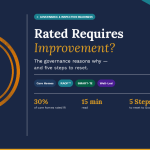
A RAOF takes fifteen minutes on a shift walk: reading one care plan, asking one question of one staff member, observing one moment of care, and noting one thing that needs to feed forward.
Applied consistently across eleven categories — care needs, medication, IPC, safeguarding, handover, staffing, documentation, environment, staff wellbeing, family engagement, and governance — RAOF builds a structured picture of where alignment exists and where drift is forming.
Over time, that picture becomes evidence. Not reassurance. Assurance.
Carevia Pro+ and Quality Partner members can access the RAOF Assurance Dashboard — a structured tool that puts RAOF into daily practice. Complete a RAOF in fifteen minutes, track drift by category over time, view month-by-month assurance trends, and generate a formatted report ready for CQC inspection evidence. Each category connects directly to Ask Carevia+ for personalised guidance grounded in your service profile.
How Leaders Know What’s Really Happening in Adult Social Care
This article is drawn from our forthcoming book — a full exploration of the RAOF framework across leadership practice, governance, safeguarding, the Mental Capacity Act, culture, and inspection readiness. Twenty-five chapters written for registered managers, nominated individuals, and quality leads navigating the quiet weight of oversight. Publication date to be announced at carevia.co.uk.
For self-assessment and reflective practice purposes only. Not legal or regulatory advice. Not a substitute for professional judgement, mandatory safeguarding reporting, or CQC compliance. Always refer to official CQC guidance. CQC inspection outcomes cannot be guaranteed.
Carevia · Navigating Quality Care · carevia.co.uk · Pro+ & Quality Partner Members Only · Unauthorised distribution prohibited